Multiple types of PFAs are in use and have a beneficial effect on poultry performance. For instance, black cumin seed (Nigella sativa L.) is a good sources of energy, protein (23%), , and unsaturated fatty acids (linoleic and oleic acids). The black cumin seeds are known to have antioxidant, hepatoprotective, digestive, and appetite stimulant activities.
Fennel (Foeniculum vulgare Mill.) is also an example of natural phytogenic product. It belongs to the family Apiaceae. Fennel seeds contain essential oil (2-6%), having trans-anethole as the major constituent. The antioxidant, antimicrobial, and hepatoprotective activities have been found in the essential oil obtained from fennel. the negative effects of heat stress on laying hen egg quality parameters were alleviated by the supplementation of fennel (Braz J Poult Sci, 17 (2015), pp. 199-208).
Red pepper (Capsicum annuum L.) is a rich source of carotenoids (vitamins C, E, and provitamin A), with well-defined antioxidant properties. The red pepper is known to have very strong active compounds viz., capsaicin, capsantine and capsisin. The active compounds available in red pepper have chemo-therapeutic and chemo-preventive effects. Red pepper fruits are used for enhancing appetite in broiler and layer birds. (Photother Res, 19 (2005), pp. 501-505), improving egg-laying performance and yolk color darkening (Turk J Vet Anim Sci, 30 (2006), pp. 7-15). Hot red pepper improved immune response in birds as indicated by decreased heterophil/lymphocytes (H/L) ratio.
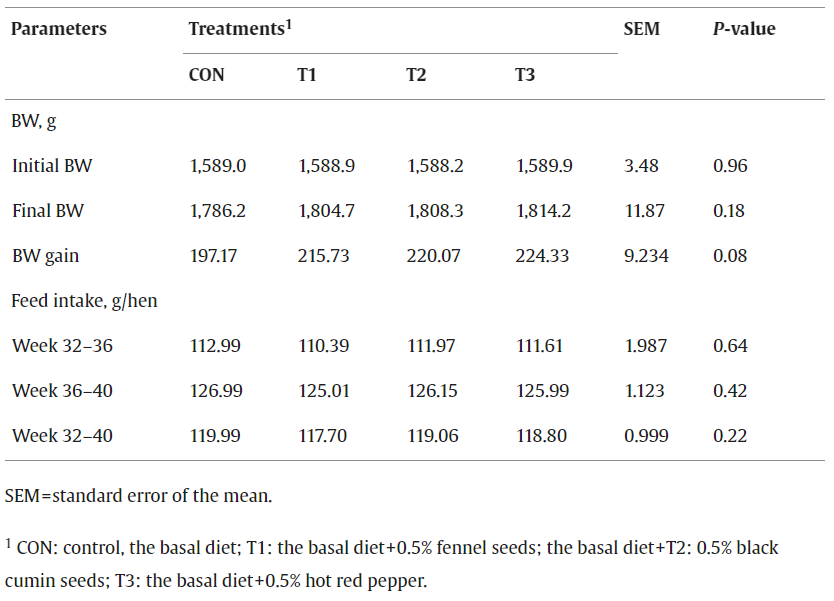
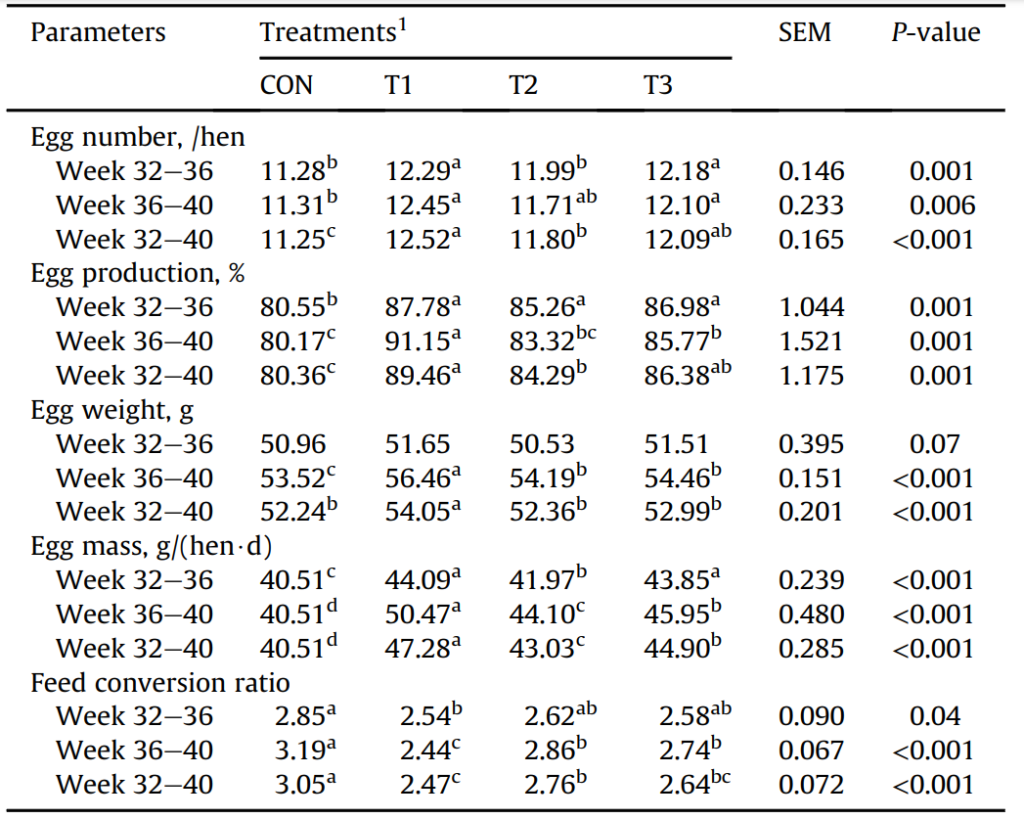
Abou-Elkhair, et al. (2018; Animal Nutrition, 04: pp. 394-400) reported that the supplementing layer diets with fennel, black cumin, and hot red pepper resulted in a non-significant effect on body weight (Table 1) and feed intake (P.0.05). However, the body weight gain (P = 0.08) was higher in all treated groups than in the control group. It is interesting to note that during the whole experimental period (32 to 40 weeks of age) a significant (P < 0.05) difference in egg production, egg number per hen, egg weight, egg mass, and FCR was observed with fennel, black cumin, and hot red pepper feeding (Table 2). The bioactive compounds present in fennel seeds, hot red pepper, and black cumin seeds improved the layer bird’s performance. The fennel seeds essential oil is known to have digestive enzymes, bile acid secretions, and appetite-enhancing activities along with antioxidant and antimicrobial properties. The active component of hot red pepper, namely capsaicin, augments nutrients and energy metabolism through glucose-6-phosphate dehydrogenase, lipoprotein lipase in adipose tissue, and pancreatic and intestinal enzyme-enhancing activities. The thymoquinone, and other constituents (e.g. anethole, carvacrol, and 4-terpinol), present in black cumin have antibacterial, antioxidant, and digestive enzymes stimulant activities.
A study in Wistar rats was conducted by feeding black pepper (0·5 %), red pepper (3·0 %), ginger (0·05 %), and spice bioactive compounds piperine (0·02 %) and capsaicin (0·01 %) for 8 weeks. The membrane fluidity study that these spices including red pepper, black pepper, and ginger induced alterations in brush border membrane fluidity and passive permeability properties. They cause an increase in microvilli length and perimeter, resulting in an increased absorptive surface of the small intestine.
It is clear from the data that herbs and spices contain bio-active components and they could be included in bird’s diet for improving nutrient absorption and utilization and modulating beneficial microbiota in the gastrointestinal tract.