
 Under following conditions economic loss increases:-
(1) If the animal are not watered daily.
(2) When animals are driven and unloaded from truck, at this time they are in stress and less selective in grazing plants .In this condition animal may eat poisonous plants.
(3) When animals are hungry for a long time, they eat enough amount of poisonous plants which shows its effect and cause problem in animals.
(4) If animal grazes early in the morning, the poisonous plants are higher in number at this time. Therefore, animal should graze after sunshine.
Poisonous Plants
There are many species of flowers and plants which are poisonous to animals. Some poisonous plants are given below:-
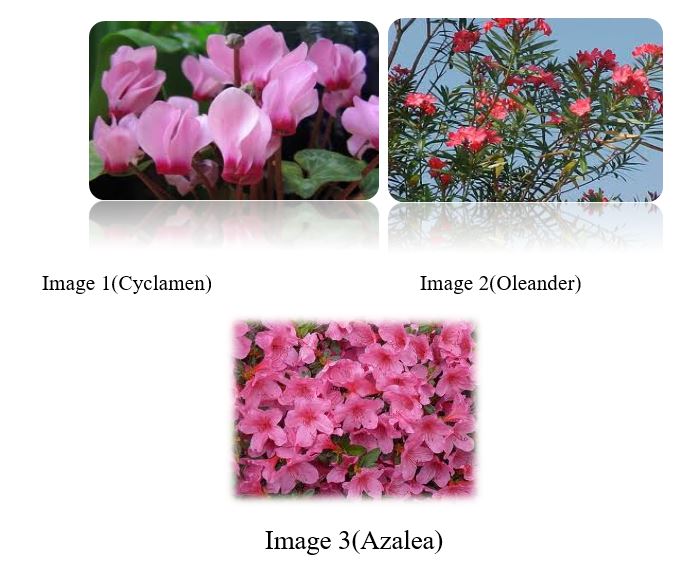
- Cyclamen:-
Roots of Cyclamen are dangerous to animal because it causes vomiting and death may be occur.(Image 1 given at End)
- Oleander:-
Oleander is an evergreen plant. It has beautiful flowers. Its leaves and flowers are very dangerous to animal health. It cause vomiting. It slows heart beat. Even it may lead to death.(Image 2)
- Azalea:-
It is very harmful for animal. It cause vomiting even if animal eat its few leaves. It cause diarrhea. Animal may fall in comma Or Death occur.(Image 3)
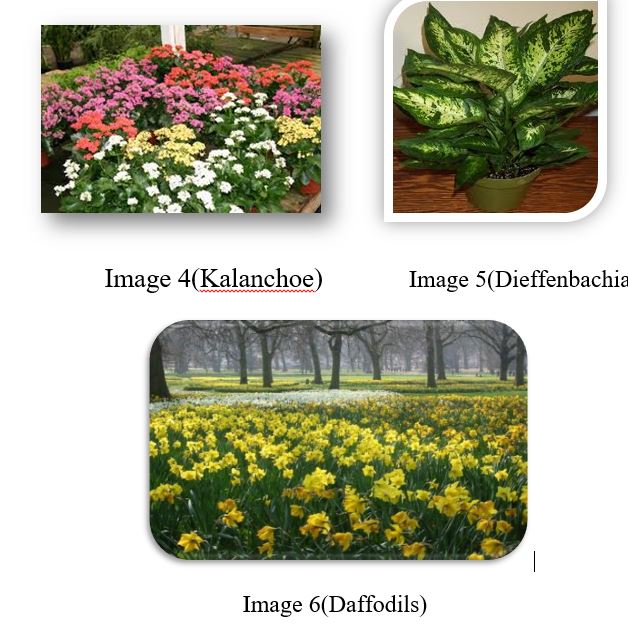
- Kalanchoe:-
If animal ingested its beautiful flower cause diarrhea and heart arrhythmias.(Image 4)
- Dieffenbachia:-
It is an ornamental plant in houses and offices. It causes oral irritation ,vomiting, difficulty swallowing and nausea.(Image 5)
- Daffodils:-
Its flowers contain alkaloid (lycorine). It cause severe vomiting ,abdominal pain ,diarrhea and cardiac arrhythmias. It may cause respiratory disease. If it shows its symptoms then it can be covered.(Image 6)
- Sago Palm:-
These plants grow in warmer areas. Plants in home and in the field are dangerous to health. It cause vomiting, harmful for stomach lining and liver disease. It may lead to death.(Image 7)
- Mushroom:- Mushrooms are eatable for human and animal. Amanita species are dangerous to health. It damages kidney and liver. These mushrooms are identified by hood or veil on top of mushroom.(Image 8)

Toxins
Toxins are the chemical present in plants which cause toxicity or poison in animal or human if they eat them. These toxin may be lipids, carbohydrates, Alkaloids, Protein, Alcohols and amino acid in chemical nature. These toxins are given below.
- Carbohydrates Toxins:-
Pectin, Oligosaccharides, Favism,
- Alkaloids:-
β-Carbolines
Pyridine
Polycyclic terpene
Steroid
Tryptamine ,
Tropane
- Lipids:-
Fatty Acids
Erucic acid
Fluoroacetate
Glycolipids
- Mycotoxins:-
Aflatoxin
Patuline
Rubratoxin
Citranain
Tricothecense
- Alcohols:-
Ethanol
Methanol
Ethylene Glycol
Propylene Glycol
- Ketones:-
Treratol
Trematone
- Proteins and Amino Acids:-
Lectins
Thiaminases
Lipoxidase
- Mycotoxins:-
Aflatoxins
Citrinin
Lupinosis
Ochratoxins
Rubratoxins
Stachybotyrotoxins
Trichothecenes and Zearalenone
- PHENOLIC TOXICANTS
Fagopyricin
Gossypol
Hypericin
Pterocin
- Chelating Poisonous:-
Nitrates, Nitrites, Phytase , Oxalates
Toxins Dangerous For Ruminants
Micro-organisms are present in ruminants in rumen. They metabolize the toxins. They act as a first line of defense against Toxicity. Other than micro-organisms , some compound are presents in rumen which denature the toxins and some other compounds which cause unpleasant in animal. Ruminants can tolerate toxicity. This ability depends upon microbial population in rumen.
Some toxins are given below which dangerous to Ruminants and presents in feed:-
SMCO
Mycotoxins
Minocin
Oxalates
Phenolic Monomers
Nitrate
Prussic Acid Poisoning
All genus of Sorghum are pastured or fed as hay, silage and fodder. Sorghum is the cause of prussic acid poisoning. In particular environment, animals fed on Sorghum Silage, hay or green chop then it can cause prussic acid poisoning. It is very dangerous. It may lead to death. It may cause when animal fed on young plants. Sheep and Cattle are more affected than Pig.
Species of Plants Contain Prussic Acid:-
Following Species of Plants contain Prussic Acid;
- Sorghum
- Sudan Grass
- Sorghum and Sudan Grass Hybrid contain 40% Prussic Acid less than Sorghum.
- Johnson Grass
- Sorghum Almum
- Prunus serotina
- Prunus virginiana
- Prunus pennsylvanica
Parts of Plants Containing Prussic Acid:-
- In Sorghum Leaf Blades contain higher quantity.
- Stem has low ammount.
- Seeds have no ammount of prussic acid.
Causes of Prussic Acid Poisoning:-
- When animal grazes sorghum, then they eat enough quantity that cause poisoning.
- Dhurrin is a chemical present in plants .IT is present in more quantity in sorghum in less quantity in other plants. Prussic acid bind to this chemical. Dhurrin is a non-poisonous Chemical.
- A chemical “emulsion” reacts with dhurrin and form the prussic acid an plants.
Prussic acid is very harmful and toxic chemical. A quantity more than 0.1% of dry tissue is very dangerous to animal.
Signs ang symptoms of Prussic Acid Poisoning:-
- Vomiting
- Staggering
- Foaming at the mouth
- Forceful Respiration
- Spams
- After some hour of death, bright cherry-red Blood
Treatment of Prussic acid Poisoning:- Animal should be treated urgently otherwise death will occur. When animal show symptoms , treat it with mixture of Sodium Thiosulphate and Sodium Nitrate or mixture of methylene blue and sodium nitrate quickly.
Precaution:-
- Animal should not graze early.
- Manage and Test the forage to avoid the prussic acid in plants.
- Use Fertilizers containing Nitrogen.
- Do not feed animals young plants.
- If there is the risk of presence Prussic Acid in forage. Harvest forage to make hay, silage to reduce Prussic Acid.


