
Impact of droughts
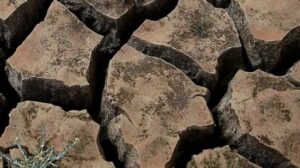
The agricultural sector is usually the first to be affected because of its heavy dependence on stored soil water. Soil water can deplete rapidly during extended dry periods. If precipitation deficiencies persist, then people dependent on other sources of water begin to feel the effects of the shortage. Those who rely on groundwater, for instance, are usually the last to be affected. When the situation returns to normal, and meteorological drought conditions have abated, the ‘recovery cycle’ follows the same sequence. Soil water reserves are replenished first, followed by stream flows, reservoirs lakes and groundwater.
Nutritional consequences of drought in the ruminants
Drought has important nutritional consequences in terms of scarcity of both, water and feed on a wider scale and it is necessary to ensure its supply for survivability of livestock. In addition to the amount, the quality of water and feed is also deteriorated in drought periods. There has been little fundamental research on the nutritional consequences of drought for ruminants and other farm species, but it is possible to construct from first principles a satisfactory explanation of metabolic mechanisms invoked for survival in a drought and the reasons why, for example the breeds -Marwari and west African goat, Marwari Sheep and Tharparkar Cattle and even donkeys appear to thrive in conditions that are intolerable for the exotic or crossbred animals. Overgrazing in the drought areas is a major factor of quality deterioration of pasture and even in the area which has not been overgrazed the plant material available on the range is extremely fibrous and low in CP which not only limits feed intake but also causes malnutrition, reduces production and even influences survivability. The impact of drought on livestock is manifested in four ways— i) Mortality ii) Loss in productivity iii)Health of animal and (iv) Loss in fertility.
Body weight loss as a measure of under-nutrition
The first and foremost effect of limiting the nutrients to the livestock due to droughts or feed scarcity situations is loss of body condition. If the animal has good fat reserves it will use these as a source of energy during weight loss. Animal deaths in drought are mainly due to exhaustion of body fat reserves. The tissues of animals dying from starvation for example, contain less than one percent crude fat (Champion, 1971). Critical body weight is the body weight below which mortality rate rises rapidly. Definite threshold values are difficult to give and depend on duration and type of underfeeding, as well as on the loss of production that is considered acceptable.
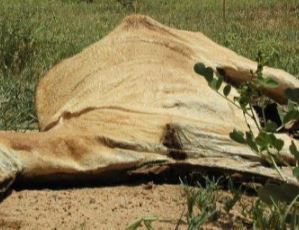
The survival or critical body weight varies with species, strain, breed and age of the animal. It has been reported that cattle will die if weight loss is > 20% of body weight, while sheep and camels can tolerate weight loss up to 30% of the body weight. Cronje (1990) gives critical bodyweight losses of 30- 40% in cattle and sheep. Obviously, the weight loss that can be tolerated depends on the original weight and condition of the animals, as well as on the physiological status of the animals: i.e. young stock tolerates less weight loss compared to mature animals (Cronje, 1990). An adult animal in good condition can also lose more weight than the same animal in poor condition. Knowledge of critical weight losses for different species is required to optimize feed resource allocation during emergency, but these are not commonly available in Pakistan.
It would also be useful to use or” develop condition scoring techniques to estimate how much weight individual animals are able to lose. The effects of temporary weight loss can be recovered by compensatory gain (O’Donovan, 1984) especially in growing animals. For milk production, the effects of periodic under nutrition on general health and fertility reproduction are however more likely to be of a long term nature. Lactation curves are unlikely to recover and calving rates and conceptions may be lowered.
Considerations for water during a drought.
The water availability during a drought is essential as water helps to regulate the body temperature, for transport of nutrients, etc. The water requirement is related to factors like heat load, production traits and DMI. The water requirement of an animal is in the range of 2.5 to 4.5 kg per kg of DMI. Murphyet a1. (1983) gave the following equation for lactating cows in early lactation in Wester conditions mainly:
Water intake (kg/day) = 15.99 + [(1.58 ± 0.271) x DMI] + [(0.9 ± 0.157) x Kg milk/day) + [(0.05 ±O.023) x
Sodium intake in g/day) + [(1.2 ± 0.l06) x minimum daily temperature in C]
Water requirement
This depends upon environmental temperature and physiological needs of animals. Cattle above 27 C atmospheric temperature require 5.5 litres of water per day. Pregnant cattle require 9 litres of water per day. A milking cow needs 0.87 litres of water per litre of milk produced in addition to its requirement of 5.5.
In case of sheep water requirement is 3 kg per day; 5 kg per day is needed for pregnant sheep & milk.
The ratio of Water Intake:
DMI will also rise if feed intake is restricted. Therefore, it may be better to express water requirement as a percentage of body weight.
Extending watering frequencies to 2-3 days have proven to be practical during drought periods for large ruminants when water is scarce. This has the advantage of reducing overall feed and water consumption with possible improved nutritional benefits in terms of increased feed digestibility which may be due to increased retention time of digesta in rumen. Body reserves were unaffected due to extending water up to 3 days as compared to daily offered. The effects of restricted water intake include reduced urine output and reduced feed intake. If the water deprivation is severe, dehydration will occur, combined with protein catabolism and finally a failure of the renal function. Water requirements of cattle may double during hot weather. If cattle do not have sufficient water, they may refuse to eat, experience lower production, and become sick. During hot, dry weather one concern about cattle drinking stagnant pond water is that animals can die if the water contains certain species of blue-green algae as these are favourable conditions for its growth. But not all blue green algae are poisonous, and the blue green algae that can generate poisonous toxins do not always do so. It congregates on or near the water surface. Convulsions, bloody diarrhoea, and sudden death characterize intoxication with blue-green algae. Clinical signs also include nervous derangement, staggering, tremors, and severe abdominal pain. If concentrations of blue green algae are suspected, dead animals such as mice, muskrats, birds, snakes, or fish may be present near water source.
Dietary energy and protein considerations of livestock during drought
During drought conditions, dietary energy in the available grazing feeds may be low because dietary fibre content is high and because degradable N content cannot sustain sufficient microbial growth in the rumen and hindgut to ensure optimal fermentation of potentially digestible dry matter. Thus even though the feed available may be plenty the animal has difficulty in consuming enough ME for maintenance within the constraints of gut fill. Still the tropical breeds excel in their adaptive capability to low energy due to lower metabolic heat requirement at maintenance. And the lower BMR of Bos indicus confers greater tolerance to both heat and drought.
However extended drought periods causing low forage production results in livestock to range further to obtain necessary amounts of DM to meet their nutritional needs. This increased travel results in the expenditure of additional energy that may result in a loss in body condition for mature animals and reduced gains in immature stock. Besides producing less forage, drought stricken plants also contain lower concentrations of crude protein, energy, vitamin A and phosphorus. Thus grazing animals need to consume a greater quality of forage to obtain needed nutrients.
Pastures dormant due to drought conditions are usually deficient in protein. The adaptation of the species like goat, sheep to the drought conditions has a greater ability to concentrate urine than cattle or horses. This ability to concentrate urine not only conserves water, it also conserves urea produced by catabolism of body protein in an animal at or below maintenance. This urea can be recycled to the rumen or hind gut and incorporated into microbial protein. Thus an animal best able to concentrate urine is best able to digest low protein, high fibre; dry tropical grasses.
The ability of ruminants to recycle the end products of catabolism of body protein through the rumen in order to generate more ME and amino acids in conditions of drought is undoubtedly of far greater evolutionary and practical significance. But the dietary protein supply if continuously remains to be low as in prolonged droughts then it is bound to affect the production and health of the animals.
Effect of nutritional deficiency on reproduction
In conditions when sufficient nutrients, particularly energy are not available to the cows or sheep/goats, a loss in body condition results causing decrease in milk production and reproductive activity may cease. In pregnant cows the end result is light weight calves and open cows. Fertility of the cows decline when their body condition score (BSC) drops to below 4; especially at calving and if these conditions occur during the breeding season, reductions in pregnancy rate can occur.
To prevent such undesirable effects, cows either must be provided sufficient nutrients to avoid weight losses and maintain production requirements or they must be relieved totally or partially from these nutritional stressors.


