
By Wajahat Masood & Dr. Tanveer Ahmad

Sugar beet (Beta vulgaris), belonging to Amaranth family of plants, is used as a source of sugar. It is the 2nd most viable source of sugar after sugarcane. It is used as a home vegetable and animal fodder as well. Sugar beet, a biennial crop, is grown as a summer and winter plant in cold temperate regions and warm areas of the worlds, respectively. Sugar beet plants can also be grown in rain fed areas with proper water supply. Generally, it requires a mild temperature for good growth. However, the high sucrose proportion is obtained when harvested during cold climate. Normally, beet requires 180-190 days for growth (from sowing to harvesting).
This Article has already been print published in Vet. News and Views.


Sugar beet and Animal Nutrition
In animal nutrition, sugar beet feeding comes with certain benefits. It is one of the most economical feedstuff out there with more digestible fiber that can be used in ration to balance it. Most of the high energy feedstuffs (high starch and low digestible fiber) cannot be used at a high proportion in ruminants’ diets due to chances of rapid starch fermentation and ruminal acidosis as a result. However, sugar beet has high proportion of digestible fiber which do not degrade readily in the rumen. The slow release of nutrients from sugar beet into the rumen significantly reduces the chance of acidosis. In addition, it is also used to keep the milk-butter fat ratio in check. Therefore, it is an ideal feedstuff to use if an animal’s milk is going to be used for cheese production. The sugar beet is also beneficial in making the dry feed more palatable. The following is the nutritional status of sugar beet. http://www.feedipedia.org/node/534
Nutrients | Composition (%) on DM basis (else mentioned) |
Dry Matter (%) | 16.1 |
Gross Energy (MJ/kg DM) | 16.2 |
Total Sugars | 65.8 |
Neutral Detergent Fiber | 16.0 |
Acid Detergent Fiber | 9.5 |
Crude Fiber | 6.0 |
Ether Extract | 0.5 |
Crude Protein | 7.9 |
Ash | 10.6 |
Sugar beet can be fed as it is, or may be chopped to small pieces to avoid animal choking. Feeding must be properly regulated keeping in mind that beets contain 80% moisture, which may cause bloat in animals if fed unregulated. 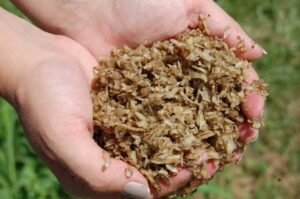 They can be mixed with any feedstuff, mainly some dry feeds so that the ration can be moist and palatable. In young calves, the use of sugar beet is beneficial due to enhanced feed intake, better calf growth and feed conversion ratio. In general it makes ration cost effective with very rare chances of lactic acidosis. The stomach/rumen fill value of sugar beets is lower than that of grass, silage or hay. Sugar beet is highly digestible having OM digestibility between 87-90%. If the intake of sugar beet exceeds 0.5% of live weight, it may depress the digestibility and even affect the lactation of milking animals. Sugar beets require to be washed thoroughly; they may carry minerals from the soil which when fed as it is may decrease the nutritional value of beet. It has also been proved that beets may account to more growth of microbial growth than the barley-oats mixture.
Sugar beet pulp in Animal Nutrition
By product obtained after extraction of juice from sugar beet is called wet beet pulp. 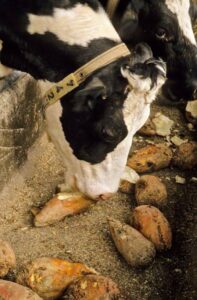 Due to high water content, it is a challenge to transport this product. They may also harbor some bacteria, compromising its preservation. These pulps can be pressed to control the moisture and increase the dry matter proportion. This pressed pulp can be oxidized if left for some time turning it into grey-whitish color. It is easier to transport but should be stored carefully as they can be spoiled quickly. Unpreserved pressed pulp is not viable to be fed to animals after 2-3 days of production. Best way is to pile up the pressed pulp and cover it with sheets, this may increase the life of pulp. If we have to store the pulp for an extended period, then the best way to do it is to ensile the pressed pulp. They can be ensiled with variety of feedstuffs like hay, wheat straw, alfalfa, dry corn grain, wheat middling etc.
The beet pulp is composed of adequate natural fibers along with proteins, minerals and vitamins. The natural fibers here are digestible to much extent making it a viable source of energy. The chemical composition can be summarized as follows (www.feedipedia.org/node/24378):
Nutrients |
Composition (%) on DM basis else mentioned |
Dry Matter |
88.8 |
Gross Energy (MJ/Kg DM) |
17.1 |
Total Sugars |
7.8 |
Neutral Detergent Fiber |
47.1 |
Acid Detergent Fiber |
23.8 |
Crude Fiber |
19.4 |
Ether Extract |
0.9 |
Crude Protein |
8.9 |
Ash |
7.1 |


